Key Takeaways
- Extreme Programming (XP) is an agile methodology built around short feedback loops, continuous testing, and close collaboration
- Test-driven development (TDD) is one of the highest-leverage habits a junior developer can build in their first year
- Pair programming is XP’s built-in mentoring mechanism—it accelerates learning faster than self-study alone
- You don’t need to work in a formal XP team to benefit from its practices
Most computer science programs teach you to write code that works. Extreme Programming teaches you to write code that lasts.
If you are in the first years of your career, you have probably noticed that gap. In school, you complete exercises alone and move on. In a professional team, code lives for years, changes hands dozens of times, and breaks in ways textbooks rarely prepare you for.
This article is for developers in years one to three of their career who want to build strong engineering habits from the start.
What Is Extreme Programming?
Extreme Programming (XP) is an agile software development methodology created by Kent Beck in the late 1990s. It takes well-known engineering practices—testing, code review, integration—and makes them continuous rather than occasional.
Beck first described the methodology in his 1999 book Extreme Programming Explained. XP is organized around five core values: communication, simplicity, feedback, courage, and respect.
For a deeper exploration of XP’s philosophical roots and how it holds up in the age of AI, see our article on Extreme Programming and modern practices.
Why Test-Driven Development Is the Best First Habit
Test-driven development (TDD) is the practice of writing a failing test before writing the code that makes it pass. The cycle has three steps:
- Red — Write a test that fails because the feature does not exist yet
- Green — Write the minimum code needed to make the test pass
- Refactor — Clean up the code without changing its behavior, using the tests as a safety net
This feels backwards to most beginners. Why write a test for something that doesn’t exist?
TDD forces you to think about what your code should do before you think about how to do it. That shift in perspective is one of the most valuable habits a developer can build early. It reduces the number of defects you introduce, and it makes you reason through requirements before touching the keyboard.
A 2008 study by Nagappan et al., conducted jointly by IBM Research and Microsoft Research, found that teams practicing TDD shipped code with 40–90% fewer defects compared to teams that did not—at a cost of 15–35% more development time. For junior developers, that tradeoff is especially favorable: the time spent writing tests is time spent learning to think like a professional.
Getting Started with TDD Today
You do not need a mentor or a formal XP team to start. Pick a language you know, find a kata (a short, self-contained coding exercise), and practice the Red-Green-Refactor cycle on your own.
Three resources to start:
- Exercism.io — 100+ exercises in most languages with optional community mentoring
- Cyber-Dojo — a browser-based environment built specifically for TDD practice
- The Coding Dojo Handbook by Emily Bache — a practical guide to kata-based learning
Pair Programming: XP’s Built-In Mentoring Model
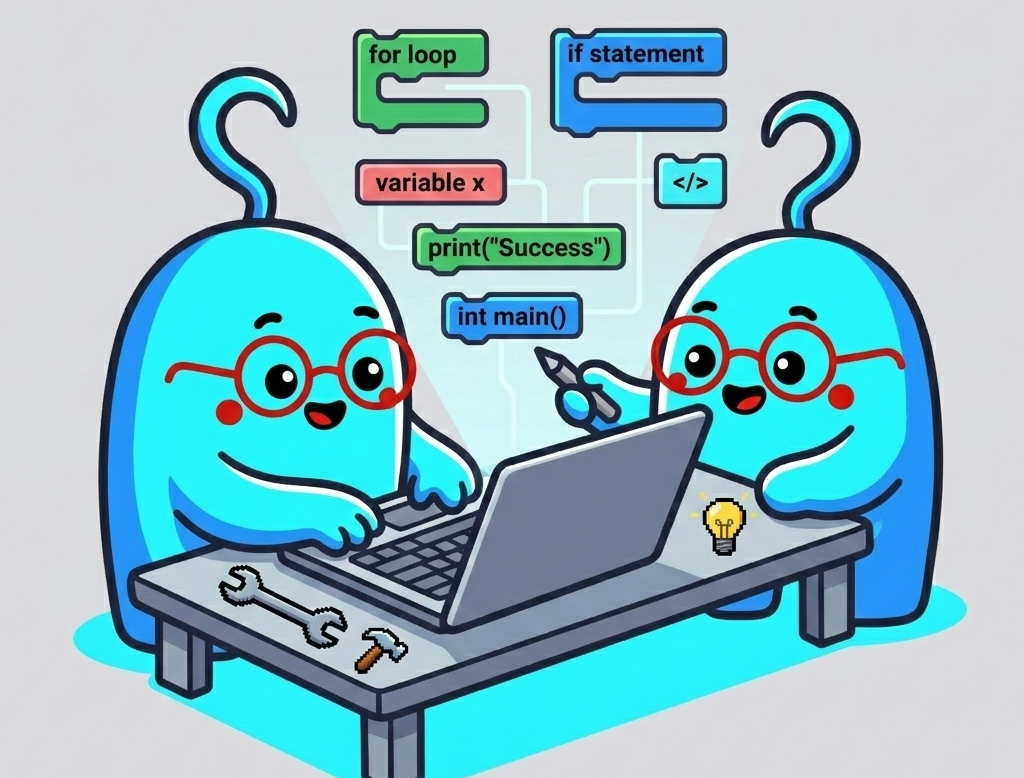
Pair programming means two developers work together at one workstation. One person (the driver) writes the code; the other (the navigator) reviews each line, thinks about direction, and catches errors in real time. Roles rotate regularly.
For junior developers, pairing with a more experienced colleague is the fastest form of mentoring available. You are not just solving a problem—you are watching how a professional thinks. You see which questions they ask before writing a line of code, how they name things, when they stop to refactor, and how they recover when something breaks.
Research by Alistair Cockburn and Laurie Williams, published in IEEE Software in 2001, found that pair programming increases code quality and reduces defect rates, while the time cost is smaller than most teams expect—typically 15% more time than solo programming, offset by significantly fewer bugs downstream.
How to Start Pairing if Your Team Doesn’t Do It Formally
Ask a colleague to pair with you on a specific problem for 30 minutes. Frame it as needing a second pair of eyes, not a formal session. Most experienced developers are willing. Once they see how it goes, it often becomes a habit.
Three XP Practices to Adopt This Week
You do not need to overhaul your workflow to benefit from XP. Start small:
- Write one test before any implementation code — Pick one small feature this week and write the failing test first.
- Pair with a colleague for 30 minutes — One session is enough to demonstrate the value.
- Commit small and commit often — Smaller commits mean faster feedback and simpler debugging. XP calls this continuous integration, and it reduces merge conflicts and deployment risk.
Frequently Asked Questions
Do I need to work in a formal XP team to benefit from XP practices?
No. TDD, pair programming, and small commits can all be adopted individually or in small groups without organizational buy-in. The practices stand on their own.
Is Extreme Programming still relevant in 2026?
Yes. Many practices now considered standard—CI/CD pipelines, automated testing, iterative delivery—were formalized by XP before they had those names. High-performing engineering teams consistently use XP’s core practices.
How long does it take to feel comfortable with TDD?
Most developers feel productive with TDD within four to eight weeks of consistent practice. The first week often feels slow. That is normal. The discomfort is the learning.
Conclusion
Extreme Programming gives junior developers a concrete path to professional-grade engineering habits. Test-driven development trains you to think before you code. Pair programming connects you to the kind of mentoring that no tutorial can replicate.
The best time to build these habits is the beginning of your career—because the practices you internalize now shape every line of code you write for years to come.
If you want to work in a team that takes software craftsmanship seriously, or your organization wants to introduce XP practices, our consulting and mentoring services are a practical place to start.
Want to go deeper? Read our full exploration of Extreme Programming’s philosophical foundations and its future with AI.